
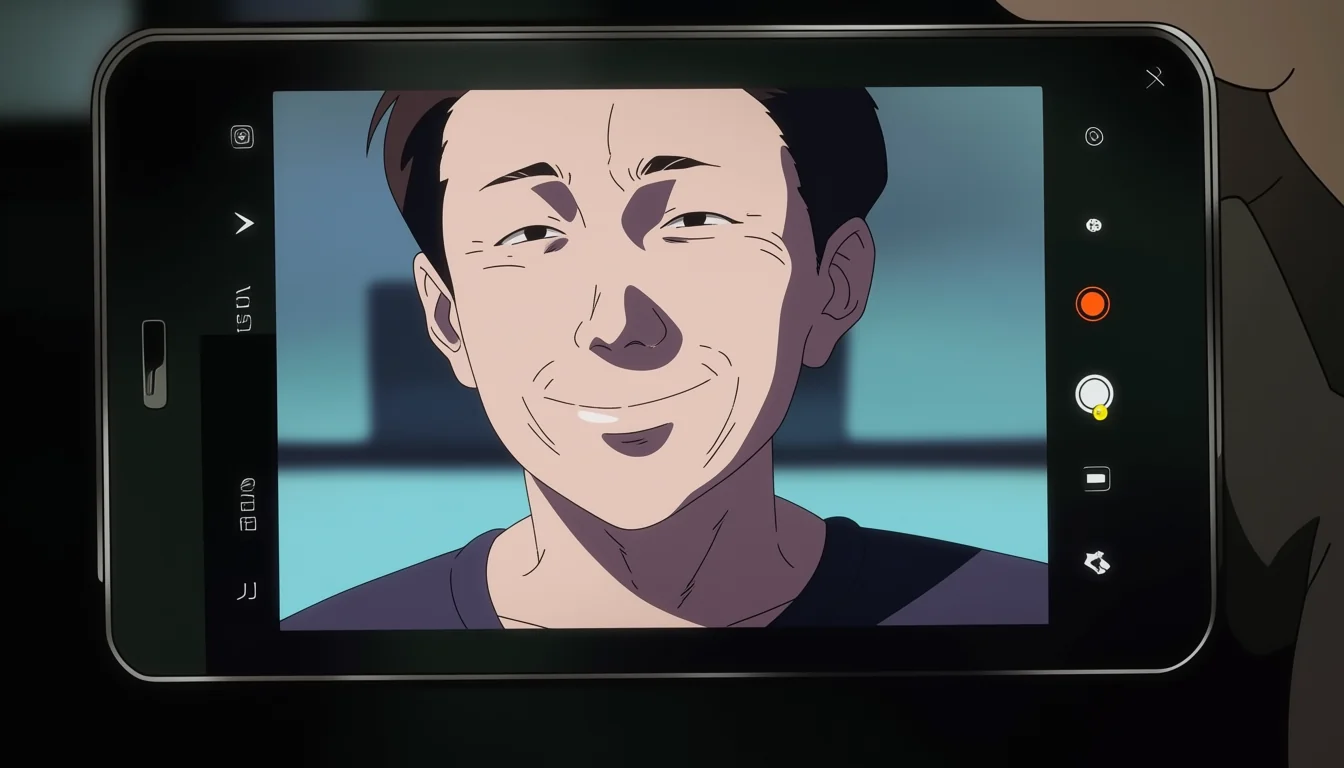
Ask where people watch adult animation and the honest answer is: in an app, on a phone, held about forty centimetres from their face, often with one thumb on the scrub bar. That viewing position quietly rewrites several craft rules that were written for televisions.
What a small screen actually removes
The first casualty is fine detail. Line weight variation, subtle texture, and small background storytelling all disappear at phone size. Anything you spent a day on that reads only at full resolution has been spent on an audience that mostly isn't there.
The second casualty is low contrast. Phone screens get used in daylight, on buses, at brightness settings the artist never chose. A carefully balanced dark scene can flatten into a grey rectangle, which is why night work needs deliberate separation rather than realistic darkness — the approach in our piece on midnight colour grades.
What survives is shape. A strong silhouette, a clear figure-ground relationship, and a limited palette all read at any size, which is why phone-first work tends to look bolder than television-era work.
Framing for a thumb-sized viewport
Composition changes when the frame is small. Wide establishing shots lose their information; the same shot at phone size becomes a smear of colour with no readable geography.
Phone-first staging tends to use fewer, larger elements per frame, closer camera distances, and clearer eye lines. It also holds shots slightly longer, because a viewer scrolling between apps needs a beat to re-enter the scene. The staging discipline is the same one described in the blocking guide — decide what the viewer must understand now, then check it at the size they'll actually see.
| Element | Television assumption | Phone reality |
|---|---|---|
| Detail | Rewards close inspection | Lost below a certain size |
| Contrast | Controlled room lighting | Daylight, auto-brightness |
| Wide shots | Establish geography | Read as texture |
| Text | Comfortable at distance | Needs larger type and margins |
Apps add a layer of rules
Distribution through an app store is not the same as distribution through a website. Store policies sit on top of platform policies, which already sit on top of the law, and stores are consistently the strictest layer for adult material.
That's why so many adult platforms ship as web apps rather than store listings, and why an app's feature set often differs from the same service in a browser. Plan for it early. A production that assumes store distribution and discovers the policy in month fourteen has a problem it can't animate its way out of — the general pattern in our piece on self-censorship.
Age gates and accounts are platform jobs
An app that shows adult material needs verified entry, account controls, and moderation behind it. Those are engineering and policy functions, not art-department ones, and they should never be reimplemented casually by a site that merely writes about the work.
That's the reasoning behind our own arrangement: creation, accounts, credits, and safety enforcement stay on the source platform through the production booth connection, so its sign-in and moderation remain in force. Characters remain fictional and unmistakably adult under the standards in the control room. The public generation tools live at anime AI generator.
A short phone-first checklist
- View every board at thumbnail size before approving it.
- Test the darkest scene at fifty percent screen brightness.
- Keep subtitle type large and away from the frame edge.
- Assume the viewer will scrub, and give each scene a readable entry point.
- Confirm the age gate loads before any content does.
None of this requires a different art style. It requires checking your work in the conditions it will actually be seen in, which is a habit most crews say they have and few actually practise.
What app viewing really asks of the craft
The phone hasn't lowered standards. It has changed which standards matter: shape over detail, separation over realism, clarity over density, and distribution planning from day one rather than month fourteen.
Work made with those priorities tends to look better on a television as well, which is the tell that they're craft rules rather than compromises. Work that starts from those priorities also survives being pulled out of context, which is most of what an app feed does to a scene.