
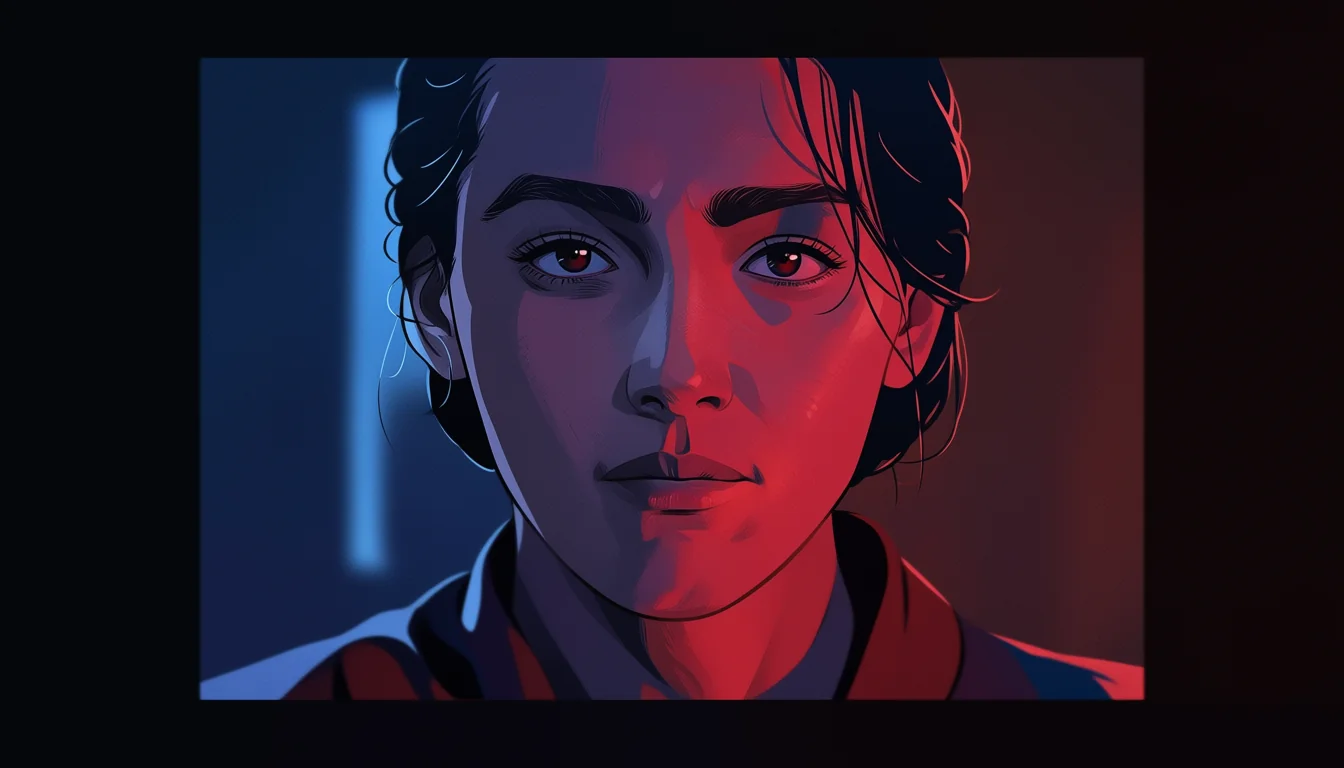
Why Midnight Colour Grades Feel More Intimate begins with night colour. The useful question is not how much can fit into one image, but what the viewer should understand now and what should arrive a moment later. For this example, imagine a small hotel room after the city has gone quiet. That fixed place gives every decision a common physical and emotional reference.
Find one believable source of light
Write the intention in plain language before describing appearance. A reliable brief names who the fictional adults are, what each person wants from the moment, and which change the scene must show. This prevents surface detail from becoming a substitute for direction. It also gives motivated contrast and restrained saturation a reason to exist instead of making it an ornamental instruction.
Start with three pieces of evidence the audience can actually see. A turn of the shoulders may show hesitation; an open route through the frame may show freedom to move; a held gaze may establish attention. Evidence is stronger than an adjective because another maker can draw it, test it, and revise it. Keep the adults visually mature and the relationship context unmistakable.
The common failure is painting every shadow pure black. It usually happens when every prompt or thumbnail is solved in isolation. Put the candidates side by side. If the space, light, wardrobe, or body language appears to reset without narrative cause, reduce variables until continuity returns. A smaller coherent decision set beats a crowded list of disconnected effects.
Separate mood from simple darkness
Use a wide view to establish permission and geography, a closer view to reveal response, and detail only when it advances the beat. This is not a mandatory shot list; it is a way to check that scale changes carry meaning. Repeating the same distance can flatten time, while changing distance for every image can make the sequence feel restless and ungrounded.
Light should belong to the location. Name its source, direction, hardness, and colour relationship. Then decide what remains readable in shadow. The same discipline applies to fabric, furniture, and props: each item should locate the people or reveal a choice. Remove anything that merely fills an empty patch. Deliberate absence often gives the important gesture more room.
Try this practical pass: grade one frame in three palettes and compare the emotional temperature. Do it before polishing language or rendering detail. Compare the versions at thumbnail size, where weak silhouettes and confused emphasis become obvious. Keep a note explaining why one version wins. That note becomes useful production knowledge instead of a lucky result you cannot reproduce.
Finish the grade on a phone screen
The non-negotiable standard is using atmosphere to support adult agency rather than obscure it. Consent is not a disclaimer pasted outside the image. It is communicated through action, response, continuity, and the absence of coercive framing. All characters must be fictional and unmistakably adult. Real-person impersonation, ambiguous age, stolen artwork, and exploitative material have no place in this workflow.
Review at phone size and then at full size. The first check reveals hierarchy and pacing; the second reveals anatomy, artefacts, and unwanted ambiguity. Ask a final set of concrete questions: Can a new reader locate the scene? Can they distinguish the adults? Does the emotional turn read without the prompt? Is every visible interaction consistent with the stated intention?
Keep a short revision ledger for night colour. Record what changed, why it changed, and whether the adjustment improved motivated contrast and restrained saturation. This prevents a later draft from quietly restoring a discarded problem. It also turns one finished scene into a reusable working method. The ledger should describe decisions, not copy prompt language or imagery from another artist.
The desired result is dark scenes that remain readable, warm, and deliberate. If that result is missing, return to the earliest decision that failed instead of covering it with more detail. Strong adult illustration is still visual storytelling: space, sequence, character, and consequence all matter. Craft makes the scene persuasive; ethical clarity makes it fit to share.
Continue through the site’s editorial principles, review the connected studio route, or send a correction through the reader contact page. For hands-on generation and platform safety controls, use anime AI generator directly.