
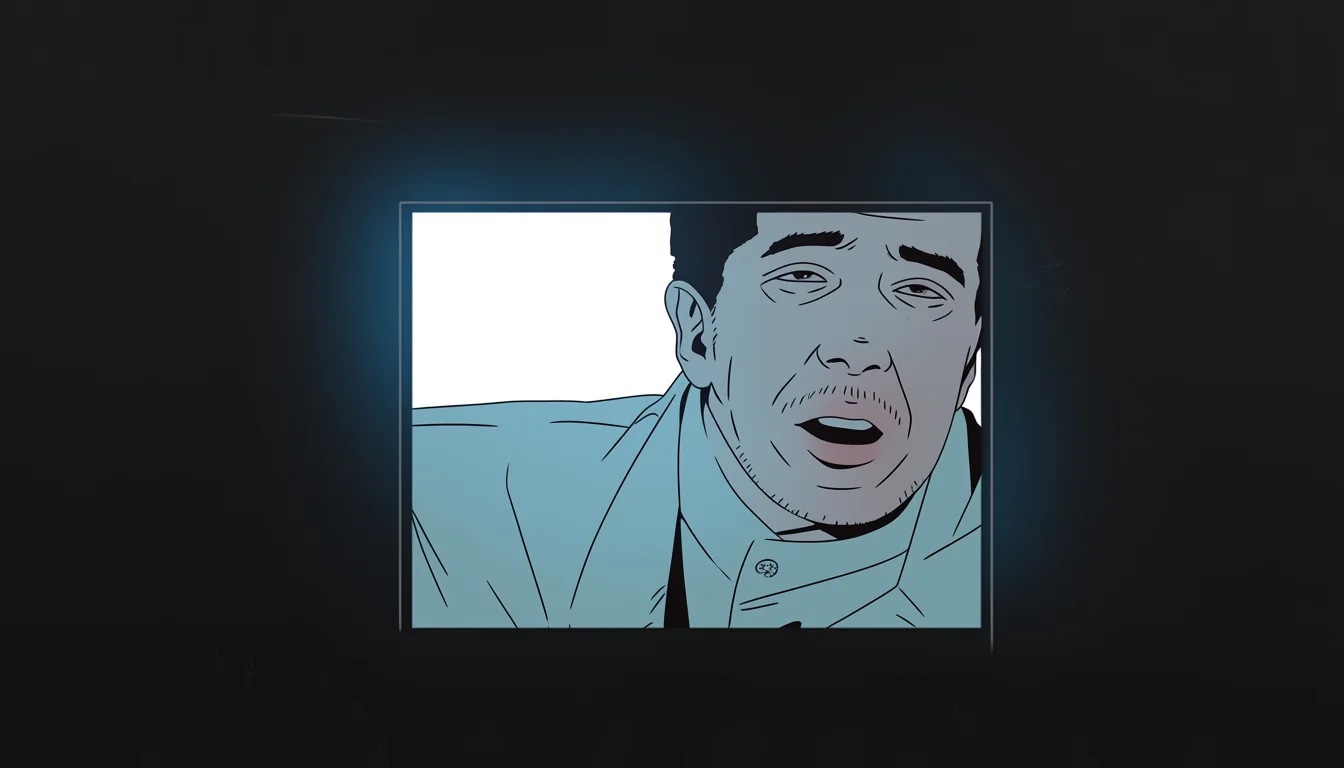
The late-night house style is easy to mock and hard to copy. Flat colour, stiff motion, long silences, characters who stare. It looks like nobody tried. Almost every piece of it is a decision, and most of the decisions started as a budget problem.
The constraints that built the look
Late-night blocks were cheap by design. Short slots, small crews, fast turnarounds, and often overseas production stages meant a show could not afford full motion or a large asset library.
Crews responded by leaning into the limitation rather than hiding it. If you can't animate a walk cycle convincingly, don't walk — cut to the character already arrived. If a background is expensive, reuse it until the reuse becomes a joke. The style's whole vocabulary comes from that logic.
The same economics that made these blocks laboratories are covered in the history of adult animation, and they explain why so much experimentation happened there rather than in prime time.
The held pose as a comic instrument
Limited motion normally hurts a show. Comedy is the exception, because comedy runs on timing and a held pose is a timing device.
Hold a character still for one second and it reads as a beat. Hold for three and it becomes uncomfortable. Hold for six while the other character keeps talking and the stillness turns into the joke. Live action can't do this cleanly — real actors twitch, breathe, and drift. A drawn character can be genuinely, unnervingly motionless.
Crews using this well decide the hold length at animatic stage rather than discovering it in the edit, which is why timing notes matter more here than in most animation.
Eleven minutes changes the structure
A half-hour needs three acts. Eleven minutes needs a setup and a turn, and that's all. No subplot, no second-act reversal, no room for a character arc.
That constraint suits absurdist material perfectly. A premise that would collapse under twenty-two minutes of scrutiny can be stated, escalated once, and ended before the audience starts asking questions. Shorter runtimes also make failure cheap, so a block can afford strange pilots.
| Constraint | Became |
|---|---|
| Tiny motion budget | Held poses as comic timing |
| Eleven-minute slot | Setup-and-turn structure |
| Reused backgrounds | Running visual jokes |
| Fast recording | Flat, unperformed delivery |
Dead air and flat delivery
Most television is terrified of silence. This style uses it as a main ingredient — conversations with three-second gaps, lines delivered with no inflection, scenes that end several seconds after the last thing happened.
Flat delivery works because it refuses to tell the audience how to feel. A joke read straight makes the viewer decide whether it's funny, and that decision is more engaging than being cued. It also ages better: performance styles date quickly, deadpan barely does.
The risk is obvious. Dead air with nothing underneath it is just dead air, and a show that mistakes flatness for wit runs out of road by episode four — one of the patterns in our list of early writing mistakes.
What copying the style usually gets wrong
Imitators reproduce the surface: the flat colour, the stiff walk, the awkward pause. What they skip is the precision underneath, because the surface reads as carelessness and carelessness is easy to fake.
In practice the timing is exact. Board artists working this way count frames on a silence the way an editor counts frames on a cut. The pose held one beat too long is a different joke from the pose held two beats too long, and the difference is planned.
The pipeline matters here too — this kind of comedy is usually built in boards rather than scripts, for reasons set out in the pipeline comparison.
Why the late-night house style still works
It works because every element does two jobs. The limited motion saves money and creates timing. The short runtime saves money and forces clarity. The flat delivery saves recording time and hands interpretation to the viewer.
Constraint-driven styles tend to outlive fashionable ones for exactly that reason: nothing in them is decoration. For anyone building a look on a small budget, that's the lesson worth taking, and our own standards for adult work sit in the control room. Public references on staging and camera choices are at camera angles.