
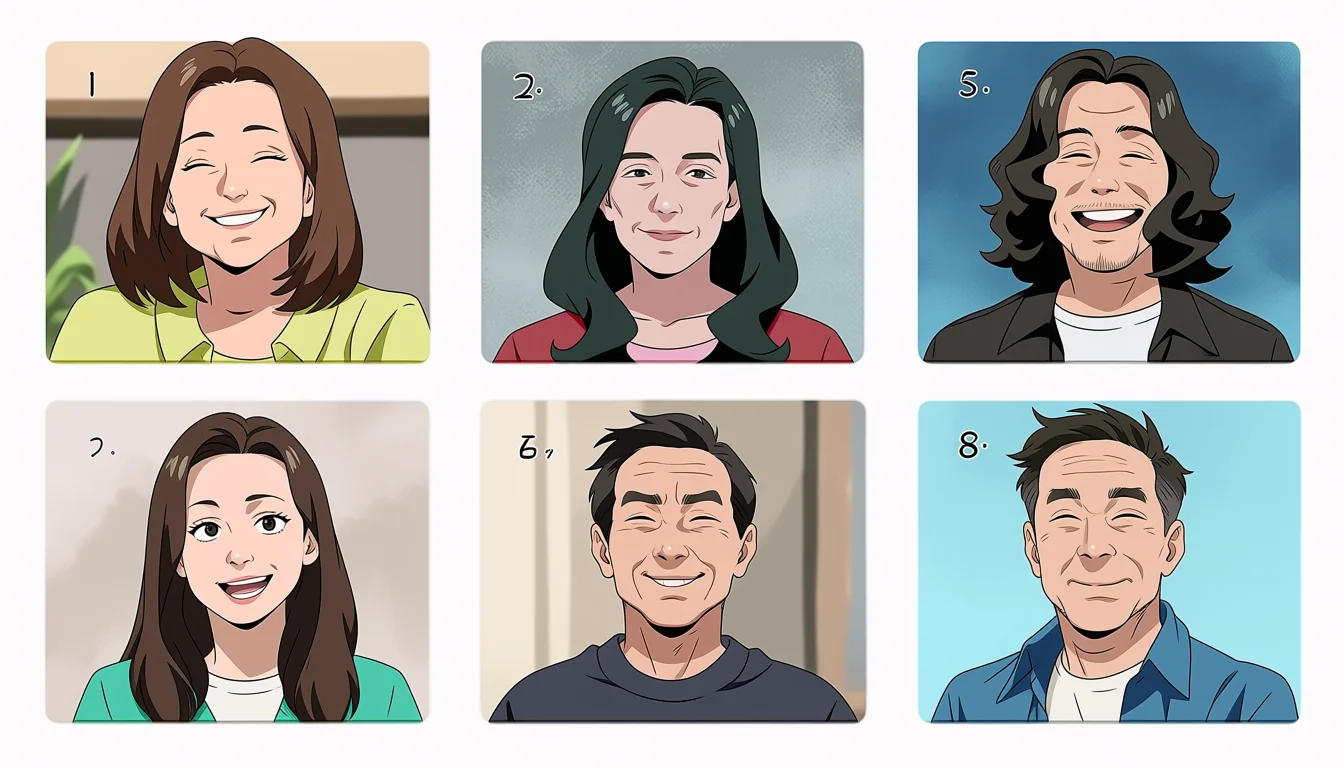
Adult animation didn't arrive in one piece. It grew in jumps, and every jump followed a change in how shows reached people. Understand the distribution and the art history makes sense.
1960: prime time opens the door
The Flintstones went out in prime time in 1960 and looked, structurally, like a live-action sitcom with a stone-age paint job. It wasn't adult in the modern sense. It was a family show placed in an adult slot, sponsored by a cigarette brand, written with jokes about mortgages and bad bosses.
That matters anyway. It proved a network would buy animation for an evening audience, and it set the half-hour, joke-per-page rhythm that adult animated comedy still uses. Nearly everything that followed borrowed its shape from that slot.
The decade after was thin. Costs stayed high, ratings cooled, and prime-time animation nearly disappeared for twenty years.
The underground pushes from outside
The real break came from outside television. Independent animators in the late 1960s and 1970s made features for cinemas, where no broadcast standards department could touch them. Fritz the Cat took an X rating in 1972 and made money, which answered the only question studios cared about.
Those films were uneven, and a lot of them have aged badly. Their contribution was proof of concept: an animated feature could be sold to adults on its content rather than in spite of it. Underground comix fed the same pipeline, supplying both artists and the assumption that drawn work could be personal and unpleasant on purpose.
Japan ran a parallel track with its own audience tiers, which is part of why the vocabulary around what counts as adult animation still gets tangled between regions.
Cable turns the experiment into an industry
The 1990s did the heavy lifting. Cable channels needed cheap, distinctive, repeatable programming, and animation delivered all three. Prime-time animated comedy came back and stayed. Late-night blocks then took the leftovers of that success and spent them on stranger things: eleven-minute runtimes, deliberately cheap motion, jokes with no punchline.
| Era | Enabler | What it unlocked |
|---|---|---|
| 1960s | Prime-time sponsorship | Adult-slot scheduling |
| 1970s | Cinema ratings | Explicit content, personal authorship |
| 1990s | Cable economics | Volume, house styles, late-night risk |
| 2010s | Streaming | Serialised animated drama |
House styles hardened in this period. Flat colour, limited motion, and strong silhouettes weren't only aesthetic picks; they were what a small crew could ship weekly. Lighting choices tightened for the same reason, and the shorthand from that era still shapes how a late-night palette reads today.
Streaming removes the reset button
Broadcast animation had a rule that was rarely written down: end the episode close to where you started, because reruns play out of order. Streaming killed that rule. Episodes could be watched in sequence, so consequences could carry.
BoJack Horseman is the usual example because it's the clearest one. It ran a comedy surface over a serialised story about depression, industry rot, and self-sabotage, and it let characters fail for whole seasons. Its jokes are dense enough to sustain repeat viewing, and its structure only works if you watch in order.
Other shows took the same freedom in other directions: animated crime drama, animated horror, animated science fiction with real continuity. The common factor isn't tone. It's the removal of the reset.
What the Flintstones-to-BoJack run actually teaches
Read as one line, the history says something plain. Adult animation advances when someone gets access to an audience without a gatekeeper in between — an evening slot, a cinema rating, a cheap cable hour, a subscription queue. The art follows the access.
For anyone making work now, that's a practical note rather than a nostalgic one. The distribution question comes first: who can legally see this, where, and with what age check in place. We keep that side documented in the control room's editorial standards, and the connected creation tools stay on the source platform through the production booth. The craft history is worth knowing, but the shows that changed things were the ones that found a door first. Reference material on model and style choices sits on models.