
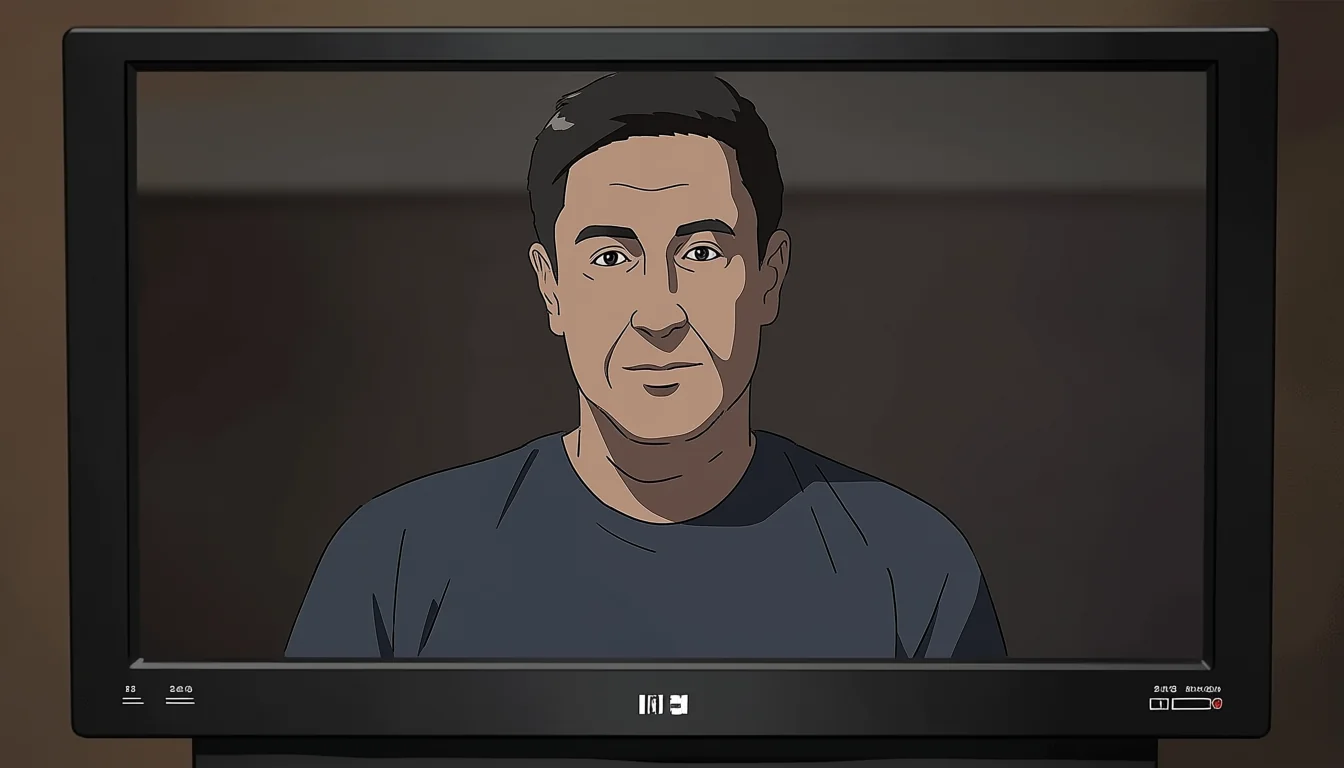
Adult animation confuses people because animation still reads as a kids' medium in a lot of countries. It isn't. Adult animation simply means an animated production written, storyboarded, and distributed for viewers over 18. The drawing style tells you almost nothing about the audience. The intent does.
The audience defines the label
Ask three people what makes a show adult and you'll get three answers: swearing, sex, or violence. None of those is the real dividing line. A show is adult animation when its writers assume an adult viewer — someone who can sit with an unresolved ending, follow a scene about money trouble or grief, and read a joke that only lands if you've had a bad job.
That assumption changes everything upstream. Scenes run longer. Silence is allowed. Characters can be wrong for a whole season without a lesson attached. Family animation usually has to reset by the closing credits; adult animation can leave damage on the board and pick it up six episodes later.
Content ratings then follow the writing, not the other way around. Plenty of adult animated shows contain no explicit material at all. They're still adult, because a nine-year-old would be bored senseless by them.
Style and subject are separate dials
One of the most useful things a new artist can learn is that art style and subject matter are two dials you set independently. Rounded shapes, warm colour, and bouncy timing don't make a show for children. They make it approachable. Pair that friendly surface with a story about addiction or a failing marriage and the contrast does real work — the softness makes the sting land harder.
The reverse is true too. Sharp, grim, high-contrast art can carry a very gentle story. Studios choose a look for how it reads at speed and at small sizes, then let the script decide the weight. If you want to see the effect in practice, the way a scene is lit does as much as the script does, which is why a midnight colour grade changes the mood of a scene before a single line is spoken.
| Dial | What it controls | Common mistake |
|---|---|---|
| Art style | How friendly or hostile the surface feels | Assuming cute art means a light story |
| Subject | What the show is actually about | Mistaking shock for depth |
| Rating | Where and to whom it can be shown | Treating it as a marketing badge |
Erotic work is one branch, not the whole tree
Explicit animation sits inside adult animation the way horror sits inside live-action film: it's a genre, not the category. Most adult animated output is comedy. A smaller share is drama, and a smaller share again is erotic.
When a production does work with explicit material, the craft demands go up rather than down. Bodies have to stay on-model through movement. Performance has to carry intent so the scene reads as two adults who both want to be there. Staging carries that meaning, which is why we treat blocking as the first decision in an intimate scene rather than the last.
The hard rules never move. Characters are fictional and unmistakably adult. No real person is depicted sexually. No ambiguity about age, ever. Those aren't stylistic preferences; they're the floor, and every studio worth watching treats them that way. Our full position is written out in the control room's editorial standards.
Distribution is part of the format
A family cartoon can go anywhere. An adult production carries its audience restriction with it, and that shapes the business as much as the art.
- Age gates. Entry confirmation before any explicit page loads.
- Platform rules. Ad networks, app stores, and payment processors all set their own limits, and they're stricter than the law in most places.
- Regional law. What ships in one country may not ship in another, so studios plan alternate cuts early.
- Creator identity. Explicit work usually needs verified adults on both sides of the camera, metaphorically speaking.
None of that is glamorous, but it decides which projects get finished. A team that ignores distribution until the final month tends to lose the final month. If you want to see how the connected studio side handles accounts, credits, and safety checks, that all lives on the source platform through the production booth connection.
Why the kids' cartoon assumption keeps coming back
The assumption survives because of how most people first met animation: on a Saturday morning, as a child. First impressions are stubborn. It took decades of prime-time animated comedy before a general audience accepted that a drawn show could be written for grown-ups, and the acceptance still isn't complete.
The useful correction is small. Stop reading animation as a genre and start reading it as a production method — one that can render anything you can draw, for anyone you choose to draw it for. Once you make that switch, adult animation stops being a contradiction and starts being what it is: an audience decision, made at the script stage, that every other department then serves. Public examples of the finished craft are collected on models.