
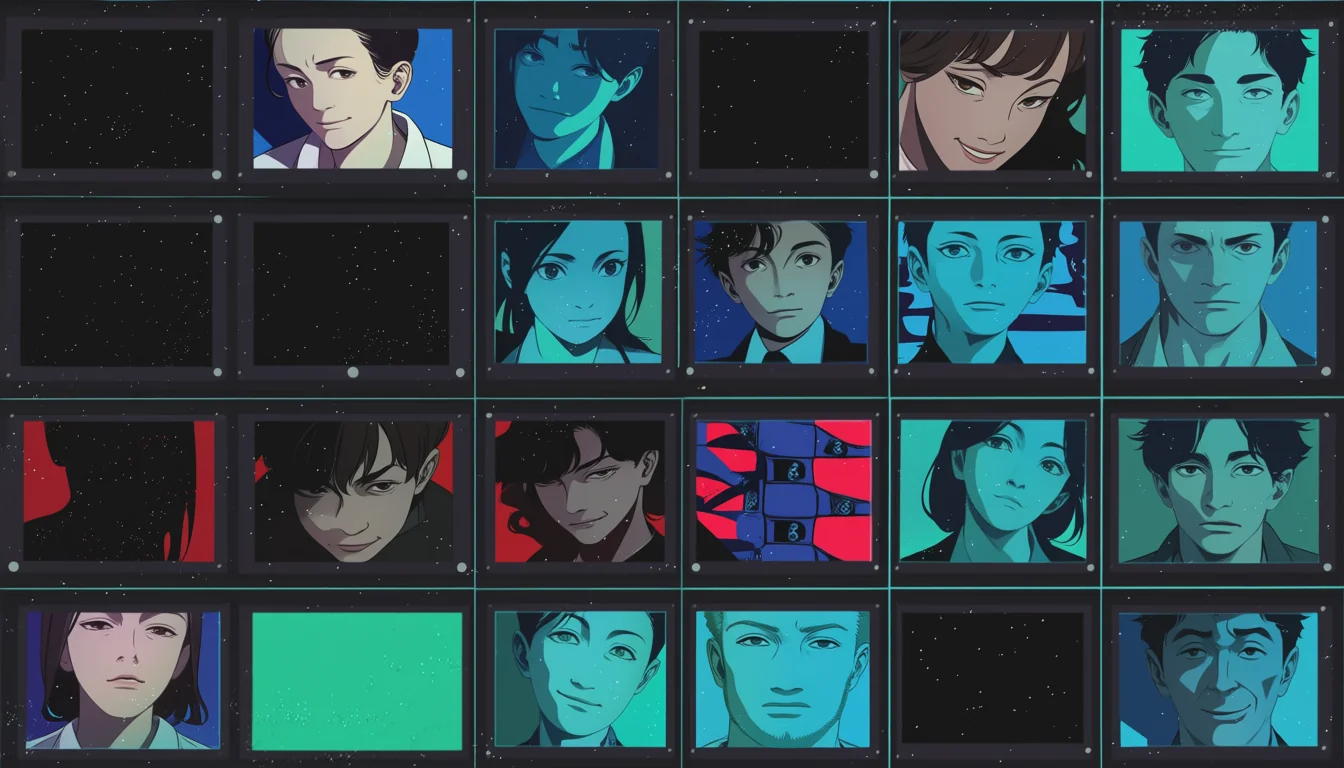
The tube layout — a grid of thumbnails, each leading to a short clip — became the default way adult video is browsed. That interface has shaped the material itself, and mostly not in helpful directions.
The thumbnail is the product
In a grid, the thumbnail is the entire pitch. It gets about half a second of attention against dozens of competitors, which means one striking frame outperforms a well-constructed sequence every time.
Work optimised for that competition starts to look a particular way: high contrast, extreme poses, faces and figures pushed to the front of frame, backgrounds simplified into blocks of colour. It reads at 200 pixels wide, which is the only thing the grid rewards.
The cost is that a strong thumbnail says nothing about whether the sequence around it works. Staging, timing, and continuity are invisible in a still — the elements that actually carry a scene, as covered in our piece on animating intimate scenes.
Clip-length viewing removes setup
Tube browsing is sampling. Viewers arrive mid-sequence, watch briefly, and move on, so anything front-loaded with setup gets abandoned before it pays off.
Producers respond by cutting setup entirely and starting at the peak. That works for the format and produces work that feels contextless when watched properly, which is the most common complaint about material made this way.
Autoplay compounds it. When the next item starts on its own, nothing has to end well, because the viewer is already somewhere else. Endings are the first casualty of any interface that removes the pause between one thing and the next.
| Format pressure | What it rewards | What it costs |
|---|---|---|
| Thumbnail grid | One striking frame | Sequence quality invisible |
| Clip sampling | Immediate peak | No setup or characterisation |
| Autoplay next | Volume of uploads | Nothing is finished or complete |
| Free access | Reach | Credit and payment vanish |
Uploads are usually copies
Most material on tube-format sites was uploaded by someone other than its maker. Metadata gets discarded in the process, so the artist or studio becomes anonymous and the economic link to the audience breaks.
Since most work in this field is funded by patronage and commissions rather than by the sites showing it, that break matters more here than it would in a licensed industry — the picture in our piece on who actually gets paid.
It also means the same clip appears dozens of times across mirrors with different titles, which makes finding the original harder rather than easier.
Each re-upload usually loses a little more: a lower bitrate, a cropped frame, a title invented by whoever posted it. After a few generations the version circulating most widely is noticeably worse than the one its makers finished, and nobody watching has any way to know.
What the format can't show
Grids are bad at exactly the things worth knowing: length, format, whether something is complete, who made it, and whether it's part of a series. A short excerpt and a finished release look identical in a thumbnail.
That's why format is one of the metadata fields worth recording separately, as we argue in the piece on metadata. Without it, a browsing session is a sequence of unrelated fragments with no way to tell what any of them belong to.
The moderation problem at volume
Sites accepting uploads at scale have a moderation cost proportional to volume, and the free ones generally aren't funding it. That's where the safety floor fails: characters must be fictional and unmistakably adult, with no ambiguity about age, no real-person sexual depiction, and no coercion presented as romance.
Those are non-negotiable and they require someone actually checking. Our standards are written out in the control room, and connected creation with real account, credit, and moderation controls stays on models.
Making work that survives the grid
If you're producing for this environment, the honest advice is to satisfy the grid without letting it write the piece. Pick one frame that works as a thumbnail deliberately, then build the sequence properly around it rather than optimising every shot for stills.
Work made that way loses nothing in a grid and gains everything when someone watches it end to end — which is, eventually, how anything that lasts gets watched.